
The Ask
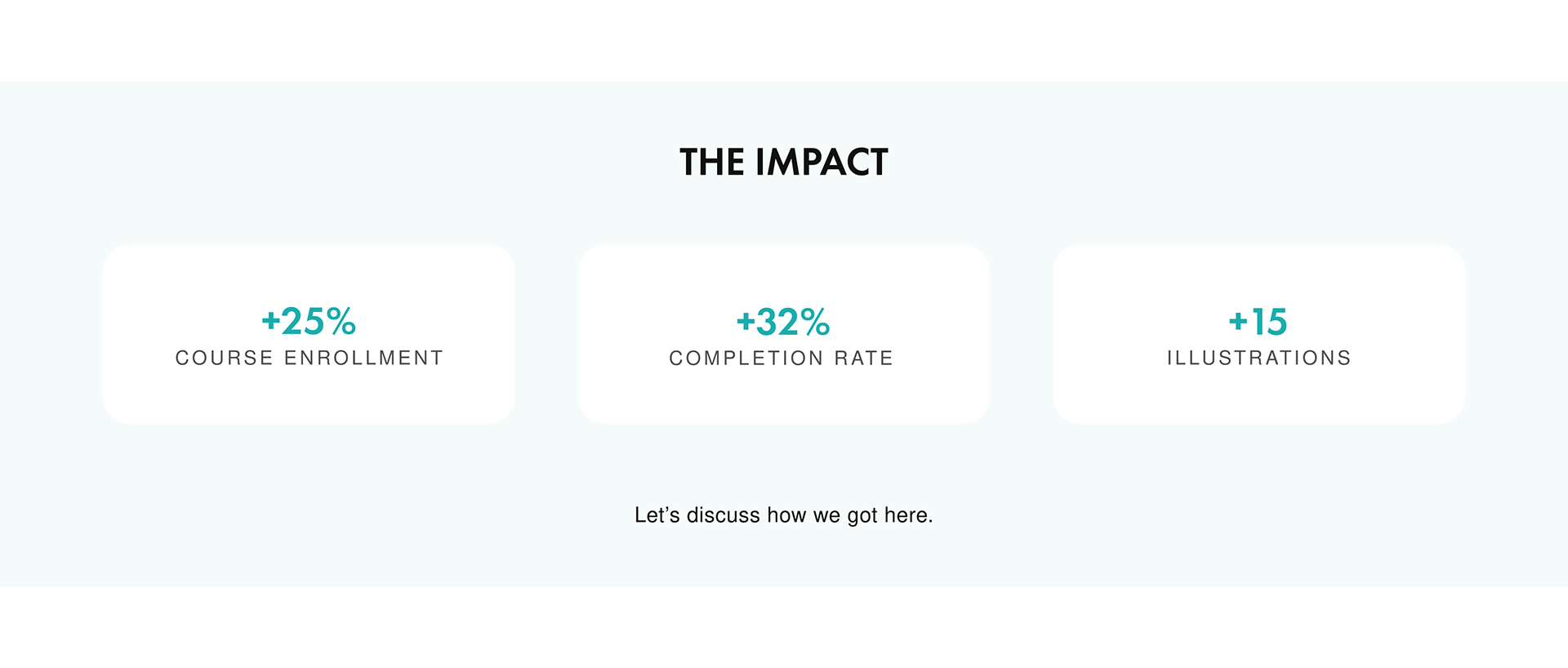
I was very excited when I was asked to revamp a course for small businesses in India by adding 15 illustrations to create a storytelling element. Leadership felt this course was lacking storytelling, as it had previously used stock photography as its only visual. The feedback was that the course felt disjointed and read more like a brochure, informative but impersonal.
The Plan
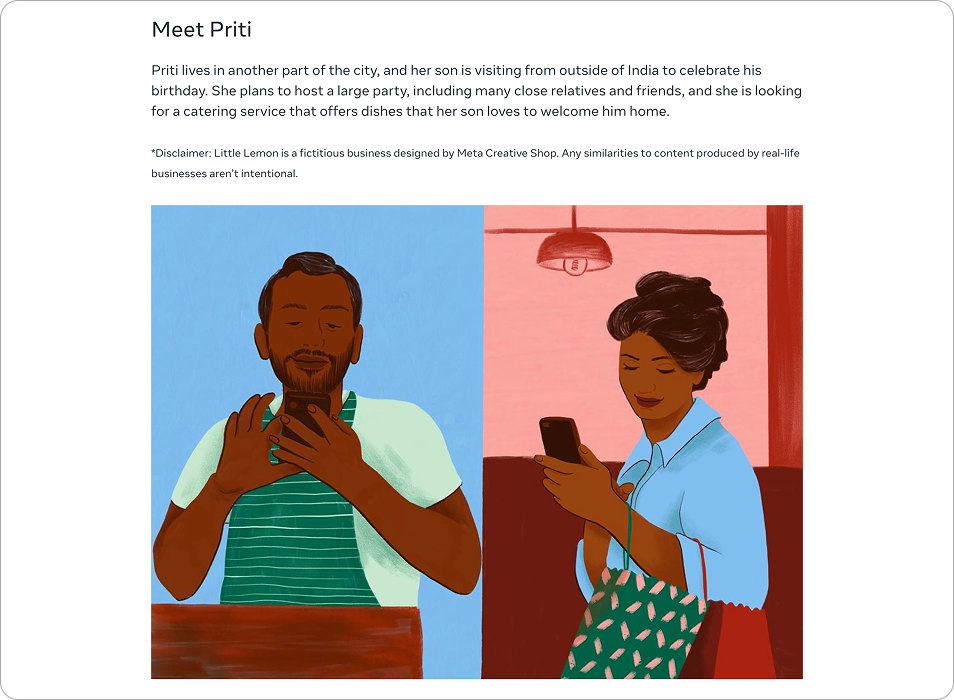
I worked with the Learning Designers on the story element. We created a character named Priti who has a son visiting from out of town. Priti wants to have some food delivered for her son's visit, as a special way of welcoming him home.
We used a fictitious business called Little Lemon as the restaurant in the story. Rakesh is the character we created as the owner of Little Lemon. He needs to know the best way to connect with potential customers, like Priti.
Little Lemon would act as a beacon for thousands of small businesses taking this course.
How can Priti quickly and easily order food from Little Lemon using WhatsApp? Unless it is efficient, Priti will look elsewhere.
How can she find a good restaurant with lots of options? Is there a way she can quickly message a restaurant owner to ask specific questions?
What is the process for small businesses to efficiently communicate with customers through WhatsApp? How can Rakesh set himself up for success in providing every possible tool for customers, like Priti?
The goal was to demonstrate the answers to these questions through storytelling. What are the benefits for both small business owners and customers?
The Process
I started out with research. Since this course had a target audience based in India, I needed to figure out a few things. What types of clothing do people in India wear on an average day vs. a more special, family get-together? What are the most popular meals people eat together as a family, and what are the favorite choices for ordering food? Is there overlap among those? Because, if so, those meals would be a clear winner to include in an illustration. I looked at references of many different types of people at various ages, and also looked at photos of restaurants in India. I kind of became an expert on Indian culture there for a while, which was really fun as I love learning about cultures.
There was one section of the course with some introductory information about the benefits of using WhatsApp as a small business owner. I decided to create spot illustrations for these three paragraphs, just to pique interest and provide some early visual balance.

Generate Leads, Spot Illustration

Drive Sales, Spot Illustration

Build Loyalty, Spot Illustration
Through the approval of these three spot illustrations, I tested color palettes and established the painterly style. I decided to keep the color palette more warm-leaning, as many of the reference images of food, clothing, and buildings I collected of India included warmer, earthier colors. I also started some initial sketches of the larger illustrations. There needed to be a few hero illustrations showing Priti as she was trying to order food, as well as her with her son. The other illustrations needed to be close-ups of a hand holding a phone, showing some UIs, or other variations of product UIs.
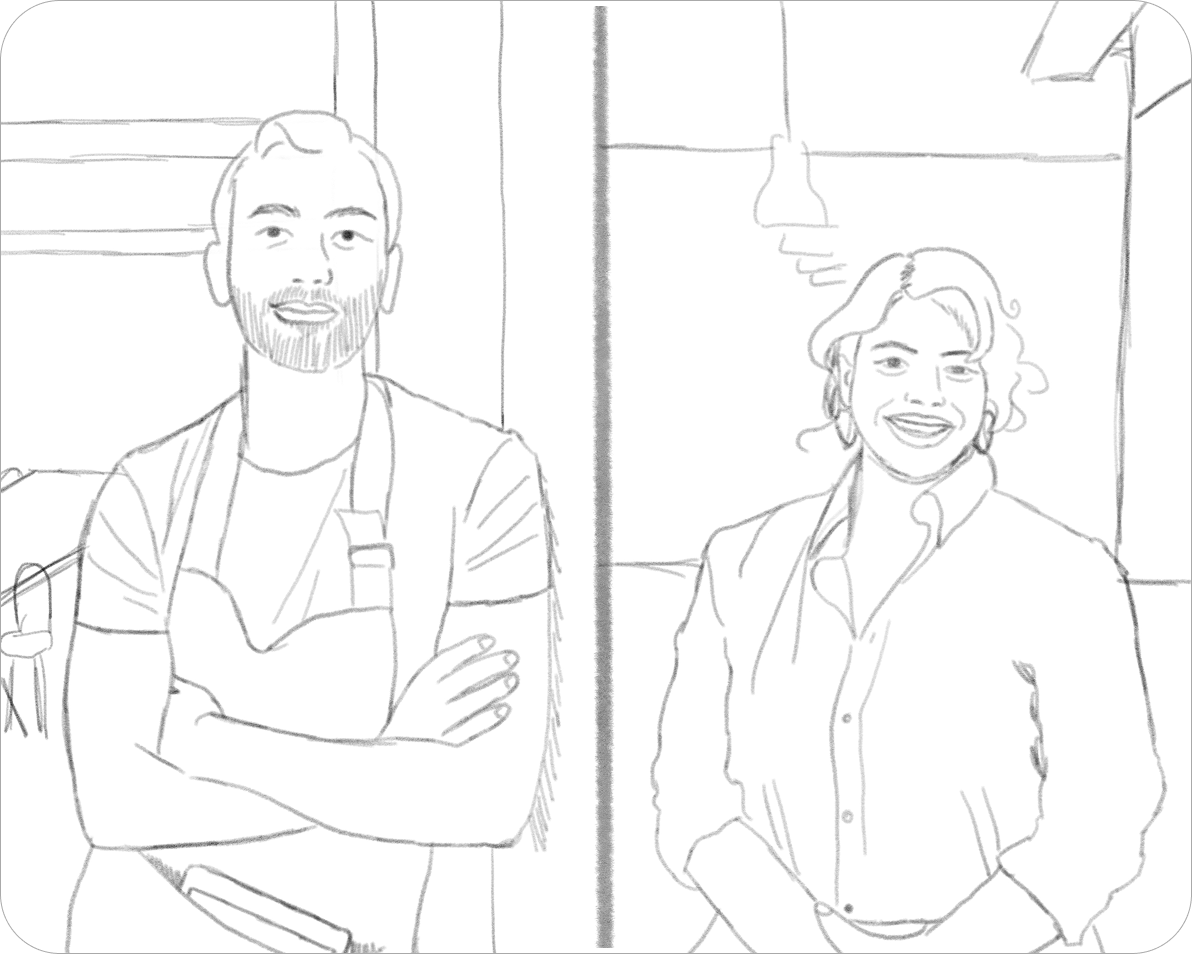
Rakesh & Priti, V1
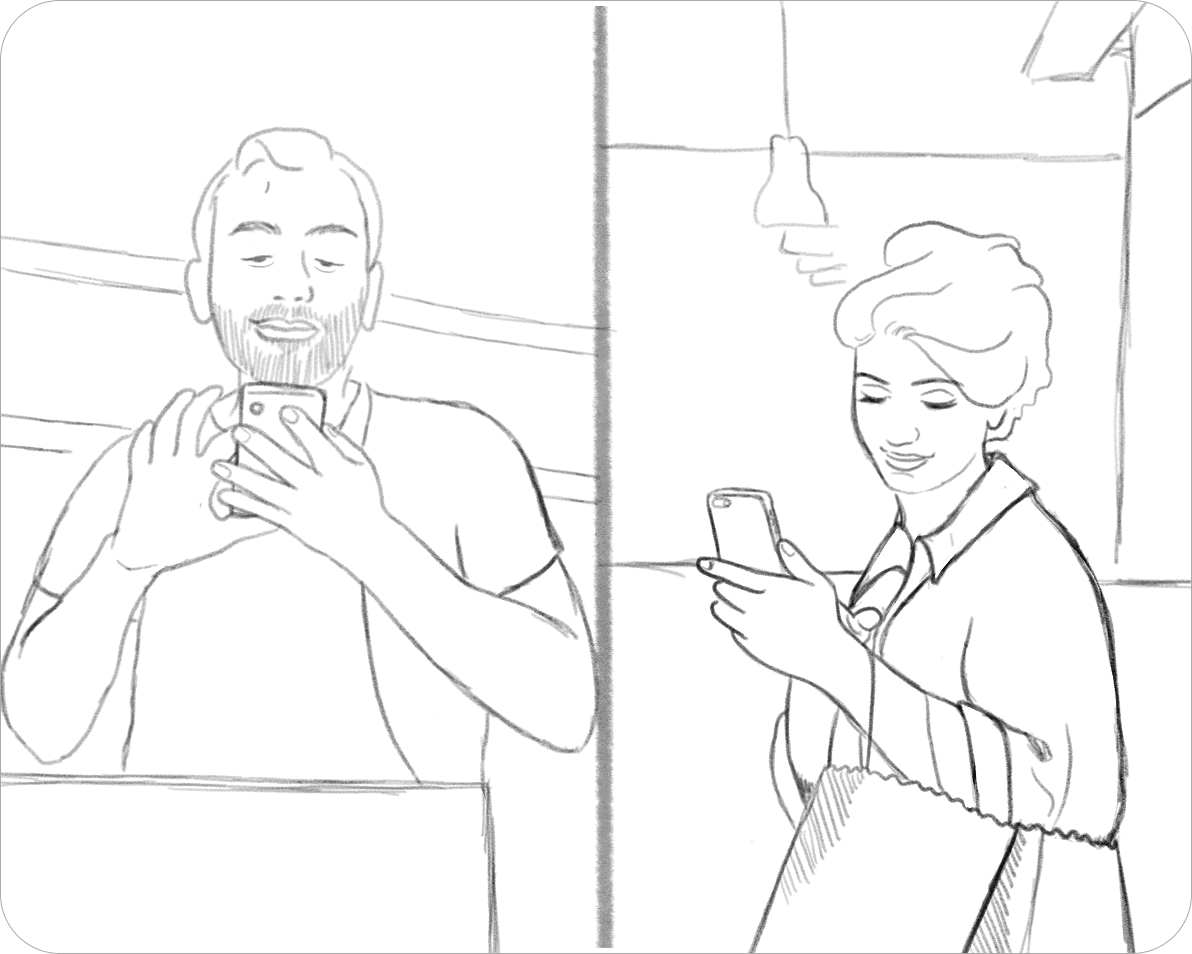
Rakesh & Priti, V2
These sketches show Little Lemon owner, Rakesh, and his customer, Priti. Priti is chatting with Rakesh about placing an order. Though these were meant to be introductory images, I decided to edit the sketch to have both of them looking at their phones to make it clearer that they are already in the process of communicating with each other. I also changed the look of Priti a bit by making her clothes more casual and adding shopping bags on her arm, to make it feel more obvious that she was a customer. The first sketch was not as clear in showing Priti as a customer, as her clothes and similar stance to Rakesh made it feel like she may be another person working at Little Lemon.
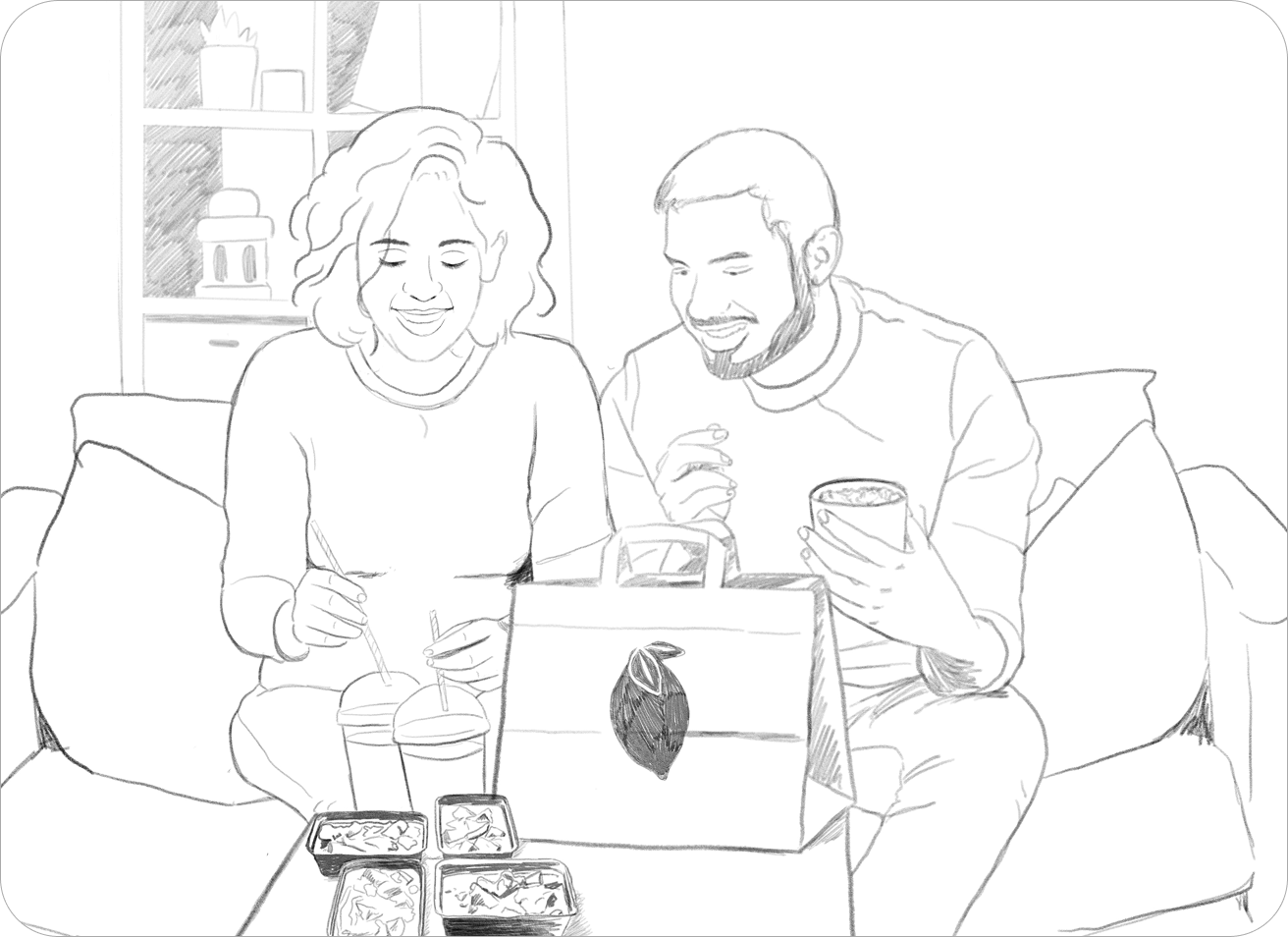
Priti & her son, V1
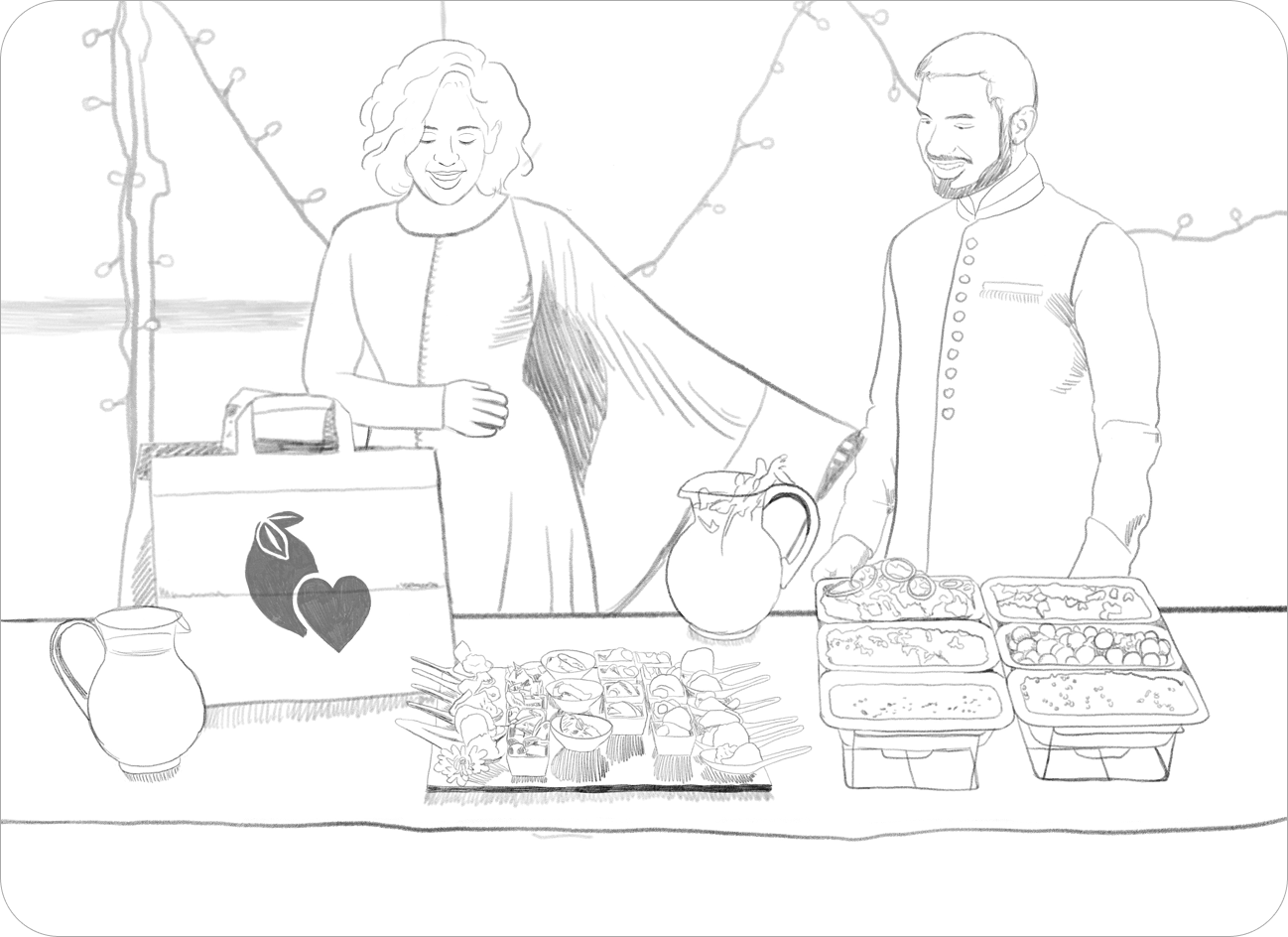
Priti & her son, V2
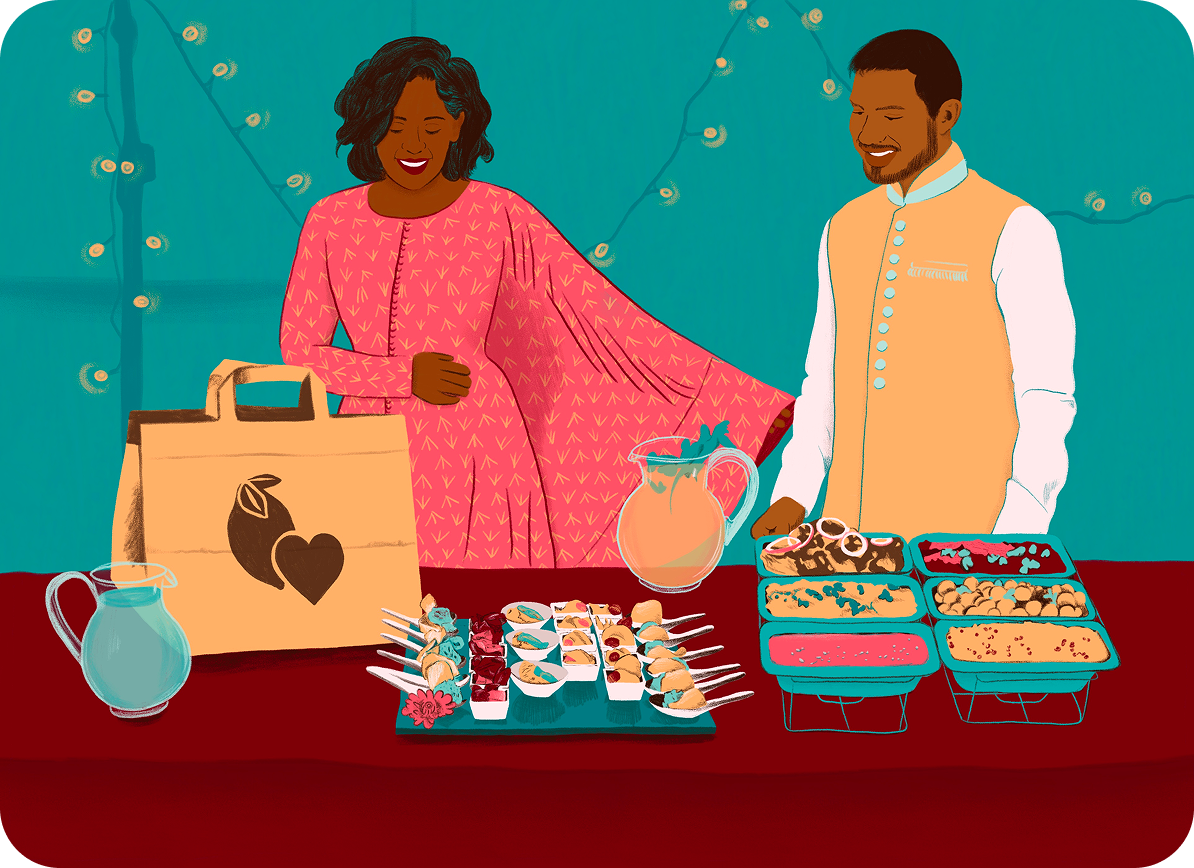
Priti & her son, Final Hero Illustration
This series of illustrations shows the progression to a finished hero. The original sketch showed Priti and her son enjoying food at home, showing a more private and casual setting. We pivoted and decided it made more sense for it to be a bit more formal, like a family get-together or welcome home party. This also enabled us to focus more on a catering option for ordering, so that communications about scheduling for large groups of people could be highlighted.
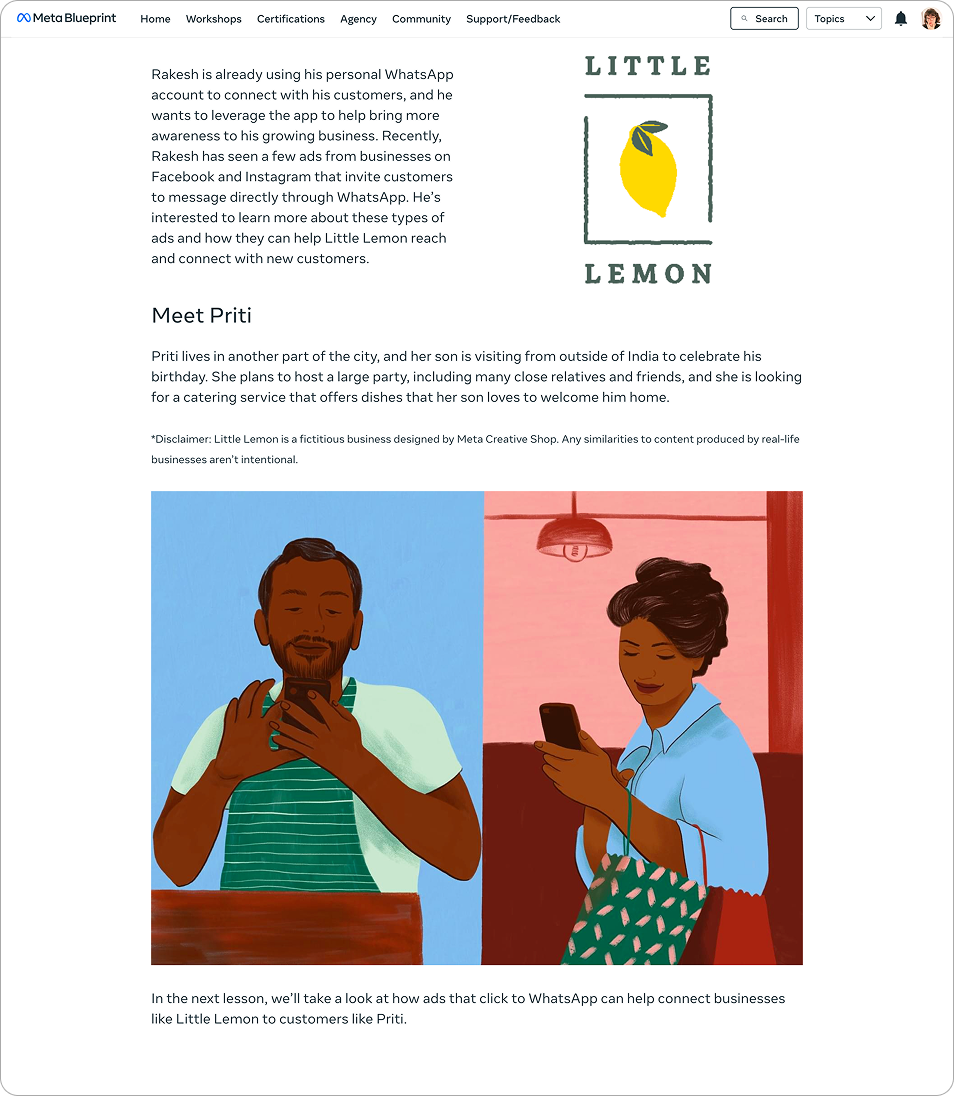
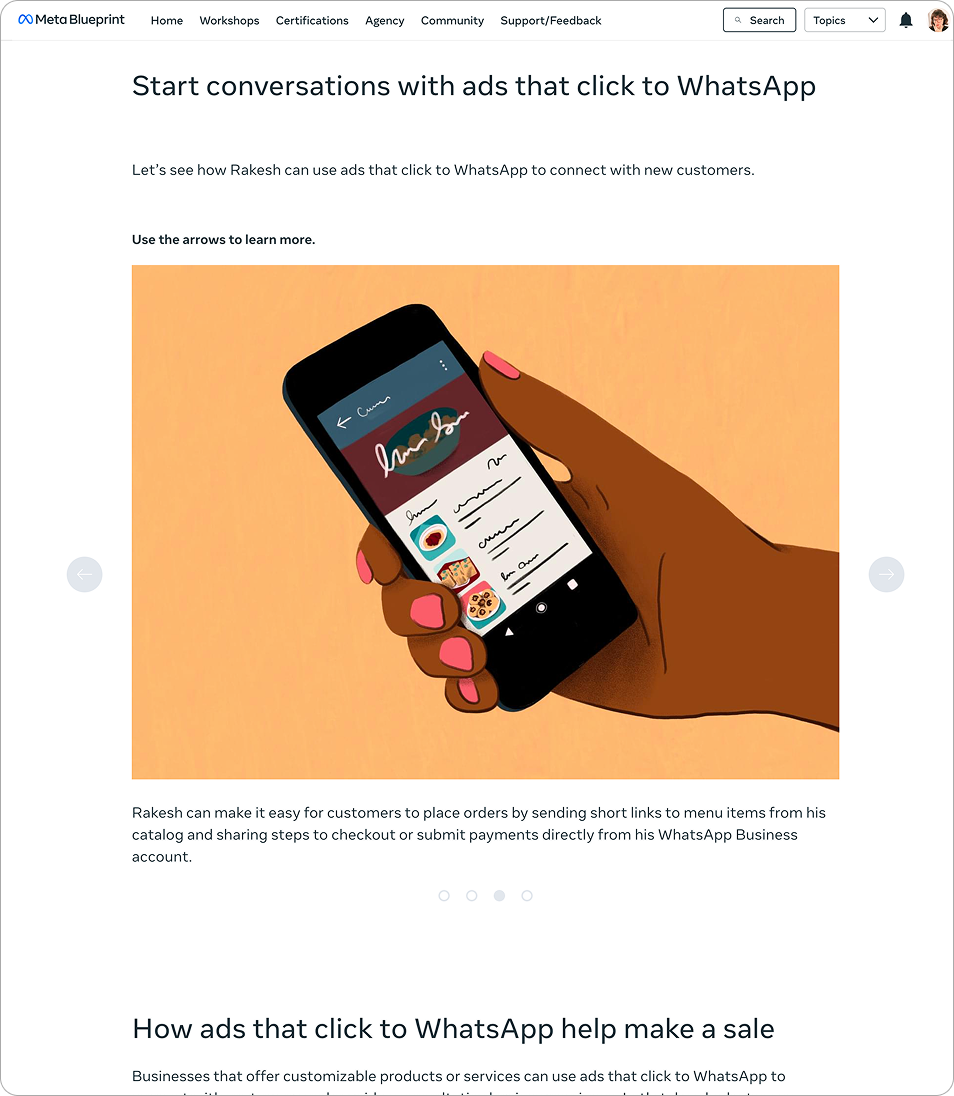
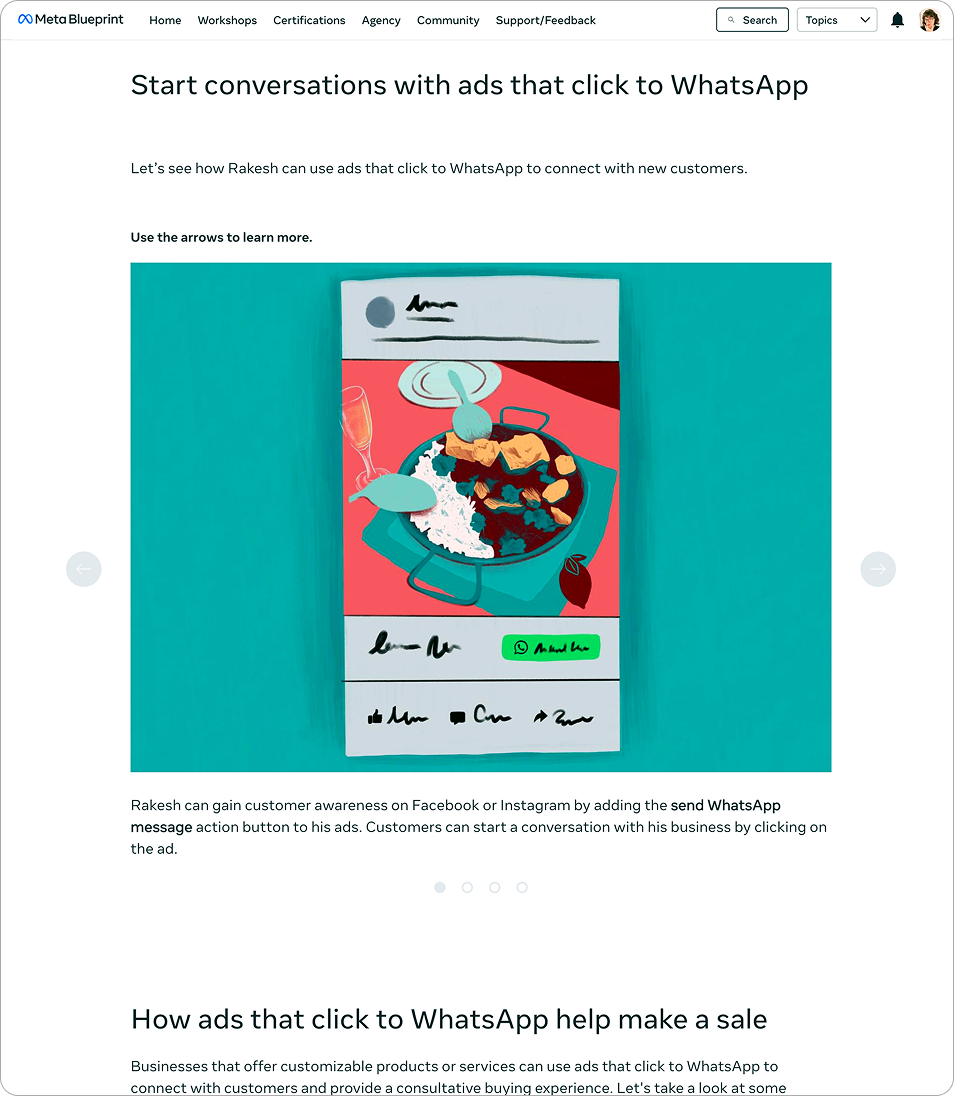
These images show some of the illustrations as used in the live course on the Meta Blueprint website.
The Outcome
Replacing the countless stock images in this course with 15 illustrations had a huge impact on engagement. I believe being able to art direct these illustrations and give them a more personal touch with a cohesive color palette piqued interest for users, giving us a 25% course enrollment boost. The completion rate also increased by 32%. I believe wrapping the course in a story with relatable characters and situations made the experience much more engaging.
The Lesson
Stock images have their place and time to shine. But, in certain contexts, illustration is so important. Especially in a case such as this, where you are trying to communicate the benefits of following a process from both a business owner's and customer's point of view. That relationship just does not read as clearly with stock images alone. Taking the time to plan and create illustrations that tie together through story and character, as well as visual cues such as color, contrast, and emphasis, is so effective at building bridges between ideas and concepts. There's nothing quite like it.